
 I have often complained about unscientific categories holding back science, for example the idiotic categorization of planets by the IAU and the continued failure to properly use SI units.
Now, I want to tackle a bad legacy in archaeology: the term “Stone Age.” We break up early human prehistory into the Paleolithic, Mesolithic (or the Epipaleothic in some circles), and Neolithic based on the use of stone tools—and, later, farming. But, this is a poor system based on an observational bias called the Streetlight Effect.
The Streetlight Effect is named for an old joke about a guy found searching for his keys at night under a street light. The person finding him asks where he last knew he had the keys. The guy says, “Over there on the other side of the street, but the light is better over here.”
The term “Stone Age” is derived from the fact that stone tools survive better than tools created from other materials. If some creature makes a tool from plant fibers or bone, these tools are far less likely to present in the fossil record than stone tools. It’s on the “dark side” of the archeological street.

 The world is entering an era of instability. For many years, people have complained of a crisis of leadership in the world.

 We know that behaviorally modern humans (i.e., we) appeared in Africa 50 thousand years ago and spread throughout the world. But, we did not live long enough for
  I watched Warcraft this past weekend. Throughout the first half of the film, I was confused. The story wasn’t boring, but it was somehow unsatisfying. The characters were well-defined, but were not engaging. The dialogue wasn’t bad, but it kept falling flat.
 You spell “trust” using only four letters: T, R, U, and S.
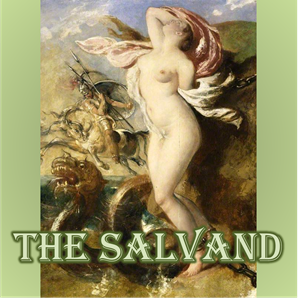 The Damsel-in-Distress is an intriguing trope, the female-gendered variation of the Salvand archetype, which is a character that needs saving. As the most prevalent expression of the Salvand, the Damsel not only informs our myth and literature, it embeds an insidious bias into our personalities, our culture, our politics. It’s a bias that corrupts our judgment, and thus our attempts at justice, like no other archetype.