
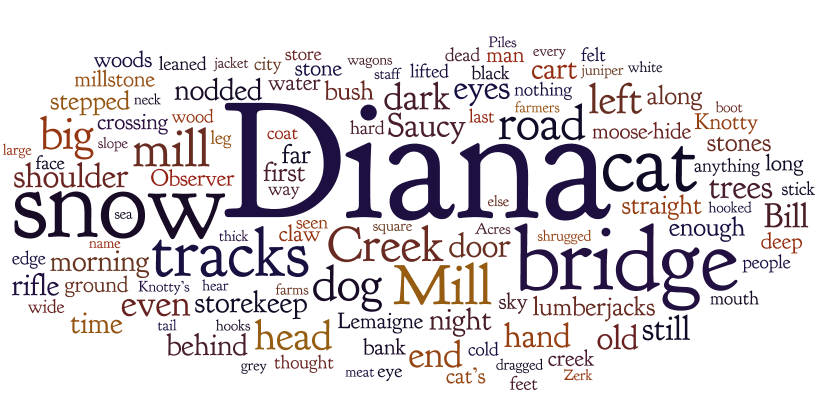
Courtesy of wordle.net, a word cloud of the short story “The Dun Cat of Mill Bridge.”
Courtesy of wordle.net, a word cloud of the short story “The Dun Cat of Mill Bridge.”
 lychnobite {LIK-noh-bite. Noun.} The OED defines lychnobite as “one who turns night into day; a ‘fast-liver.'”
From the Greek lychnobios, from lychnos, “lamp,” and bios, “life.”
– Endangered Words : A Collection of Rare Gems for Book Lovers by Simon Hertnon.
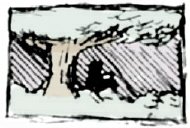 A dog sat in Amalgam’s market street
awaiting those who bring the butcher meat.
We know to watch — the dog is in our way —
and still we bark in anger every day.
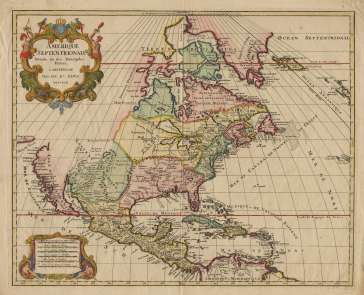 History teacher Michael Morgan has a great article on first contact between English colonists and the Algonquian people living in what is now the State of Delaware at DelmarvaNow.com. The encounter was not peaceful because the Kuskawaroak, or White Bead Makers*, were naturally very distrustful of the odd-looking invaders.
These peoples, part of what has been called the Algonquian Migration, are of great interest to me and I hope you, too, enjoy the article!
_
* These days, the Kuskawaroak are better known as the Tidewater People, or “Nanticoke.”
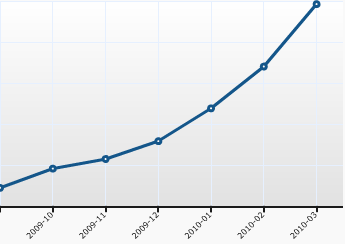 Not sure when the readership of the Leith Literary blog will level off, but it doesn’t seem like it will be any time soon. March’s readership rose more steeply than ever before.
So, here at the end of March, let me thank you all for your enthusiastic support!
 From Delight and Pastime or Pleasant Diversion for both sexes consisting of Good History &c &c (1697) as quoted in Humour, Wit and Satire of the Seventeenth Century collected and illustrated by John Ashton:
“If you ask why borrowed Books seldom return to their Owners? this is the Reason one gives for it : Because ’tis easier to keep ’em, than what is in them.”
Ain’t that the truth.
I want to start this week’s writer link soup with two author success stories from the Shooting Stars blog: Sarah Wylie and Mary Lindsey. Check them out; their story could be your story someday!
At the suggestion of her son, Becky Levine digs into the metaphorical Professor Umbridge, while Kelly Morgan of Distracted By The Internet gives us an intriguing peek into her writing process.
Heather Singh writes in her Composition Book about the Top Ten highlights from the Novel Writing Retreat at the Vermont College of Fine Arts, while John over at BookFox gives into the “evil meme” and presents his list of the Top Eight books that have influenced him. I may give into this fad myself soon.
Les Edgerton advises writers to avoid “as” and “-ing” phrases, while Lydia at The Sharp Angle discusses how to use micro-themes to bring energy to your writing.
Juliette Wade at Talk To YoUniverse explains how to let your characters use their social skills, and Liesl at Writer Ropes and Hopes kicks off her Contradictions series (a very clever idea, by the way) by navigating between showing and telling.
And big THANKS to Jade Smith for including my “In Defense of Coffee Shop Writers” in her latest link wave!
 We have some interesting links from publishing biz pros this week. By the way, subscribed yet? Check out the sidebar and sign up!
The Author magazine editor’s blog attacks some intriguing issues for writers: the great discipline it takes to write without an outline, ending a story before the readers expect it to end, and how the lowest of lows proves that there is a high within us. Good reads!
Rob Asghar explains, in a special and snarkily funny piece for the Huffington Post, seven lessons for aspiring authors: Go Rogue! Definitely worth the click.
Eric at Pimp My Novel explains the epistemology of publishing in five easy minutes, while the Moby Lives blogs addresses something near and dear to my heart as a religious scholar who focused on Islam during my heady days at the University of Virginia: better textual analysis of early copies of the Qur’an.
Alan Rinzler of The Book Deal asks “Is a bestseller hiding in your academic papers?” and offers some insider tips for preparing and delivering a winning pitch.
Finally, Moonrat at Editorial Ass answers the following ass-tastic questions:
Enjoy!
How did I miss this? Something remarkable was found that combines languages and early American history.
In January, National Geographic reported on a slate found in a well at the Jamestown settlement which seems to contain information used by English colonists during the early 1600s to communicate with the local Native Americans, who spoke an Algonquian language.
I have always felt that the dynamics of different American peoples (the Iroquoian, Algonquian, Siouan, Muskogean, etc.) should be at least as well-addressed in American history as the dynamics between the Spanish, French, British, and Dutch invaders colonists.
This discovery makes specific what most modern Americans tend to think of in unrealistically generic terms, i.e. the “Native American” language. British colonists had to deal with the real world particulars of the residents of North America, who belonged to several linguistic/cultural groups as distinct as the Europeans are from the Arabs.

 Oh, we have a big ol’ bunch o’ literary agent links this week, my friends.
FYI: Jessica at BookEnds will not consider representing you for an up-front payment in lieu of or in addition to a commission, and she probably won’t click a link to a video query, but she will answer a lot of questions about submitting a partial.
At Dystel & Goderich, Jane explains how the submission process works, Miriam throws in her two cents about thrillers, and Jessica dismisses a few misconceptions about publishing.
Nathan Bransford dives into hard-sell query letter subject lines, answers ten questions about self-publishing, and points out the literary impact of one of my favorite cognitive biases: the Dunning-Kruger Effect.
Janet Reid reminds us to be careful with queries and death threats, while Nathan Henrion wonders if fiction writers can mimic musical artists.
Finally, the Rejectionist discusses recent demonic rejections, while Rachelle Gardner discusses freelance editors and how long the process takes from submission to hitting the shelves.