 I have to confess a particularly deep connection to the events of 9/11. Not only was I scheduled to fly back to the mainland from visiting family in Hawai’i on that day, but I was working in counter-terrorism as an Arabic linguist at the time, I had studied Islam at university, and had foreseen this innovation in tactics years before while studying the origins of Wahhabi militancy.*
Recent developments have caught my attention again, as a writer: workers digging at Ground Zero have uncovered a ship dating to the 1700s in the muck under where the World Trade Center once stood. (See the Christian Science Monitor or Associated Press for the full story.)
The story of this ship is intriguing for many reasons. It reveals how pollution has actually made the world a better place for wooden ships, how New Yorkers used to be able to purchase land that didn’t exist, and how much an iron anchor from the period weighed, all excellent background material for historical fiction writers.
Follow one of the links above to read more.
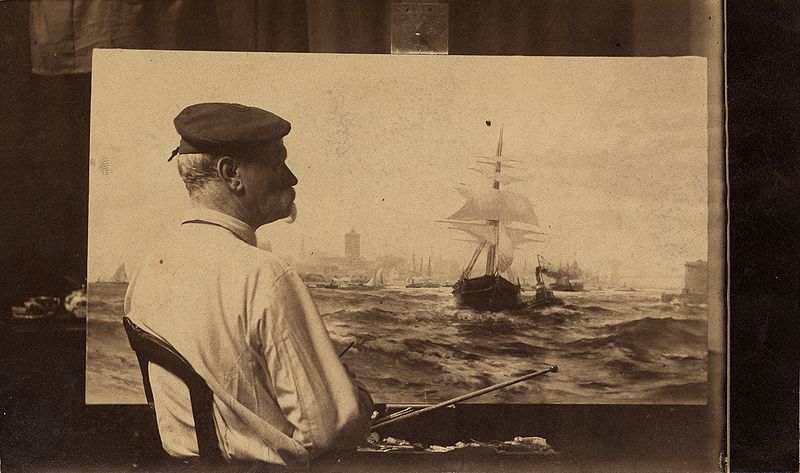
Edward Moran, who painted many maritime scenes, including of New York Harbor. By the time this photograph was taken around 1870, the WTC ship had already been abandoned to the muck for over half a century.
* For the full deets on the prescient notebook doodle I’m referencing here, ask nicely and I might blog about it.

 Oh where does the time go? Is it Thursday already?
 There’s a whole lotta “self” going on in publishing, from the web-driven growth of self-publishing to the expectation of author self-promotion in traditional publishing.
 Do you think the Norse god Odin, who takes advice from a severed head, rides an eight-legged horse, talks to ravens, sacrificed an eye and hanged himself in the pursuit of wisdom, would appreciate us referring to his day as “Hump Day”?!
 I am revamping my j.nelsonleith.com website — where I used to host a political blog — as the official home of Leith Literary. I will, of course, transfer all the content from here, and leave a sticky note. Updates to come!
 Mel Gibson’s latest screenplay is an adaptation of Agatha Christie’s mega-bestselling murder mystery, And Then There Were None … but using the original title.
 yess n also iss English Dialect Dictionary easse : yes(se) ‘large earthworm’ …